Parallel Parking Pro succeeds by focusing on a single, well-executed mechanic: maneuvering a car into a tight space. The level design is thoughtful, introducing new challenges at a pace that feels natural. The controls are responsive but weighty, requiring players to think ahead rather than react quickly. The minimalist art style and soothing sound design create a relaxed atmosphere that encourages repeated play. It is a perfect pick for anyone looking for a low-stakes puzzle experience that sharpens spatial awareness without any pressure.
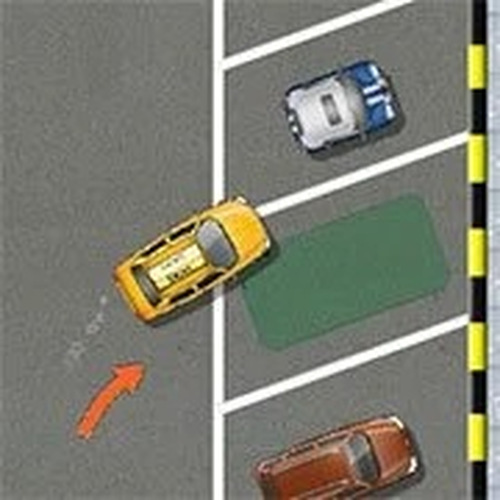
In Parallel Parking Pro, every level presents a self-contained puzzle. The player must navigate a car from a starting position to a clearly marked parking spot. The challenge comes from the environment: walls, other vehicles, and narrow pathways create a maze-like space that requires careful forward and backward movement. There is no timer counting down, and no penalty for taking a long time. This design encourages players to stop, look at the layout, and plan a route before touching the controls. The satisfaction comes from executing that plan smoothly, without scraping against any surface.
The levels in Parallel Parking Pro are arranged to gradually introduce new concepts. Early stages feature wide, open spaces with only a single obstacle to avoid. As players progress, the spaces become tighter and the obstacles more numerous. Later levels might require a three-point turn in a narrow alley or reversing around a corner into a spot that is barely wider than the car itself. Each stage is a self-contained puzzle that teaches a specific maneuver. The difficulty curve feels natural, giving players time to build confidence before asking them to handle more complex arrangements.
The controls are straightforward: on-screen buttons or keyboard keys for forward, reverse, and steering. The car responds with a slight delay, mimicking the weight and momentum of a real vehicle. This feedback is crucial because it forces players to anticipate their movements rather than react instantly. When the car comes close to an obstacle, a subtle visual cue appears, such as a color change on the edge of the screen. This gentle warning helps players correct their course without the frustration of sudden collisions. The overall feel is one of deliberate, thoughtful control rather than twitchy reflexes.
The game adopts a clean, minimalist visual style. Cars are rendered with simple shapes and solid colors, and the environments are composed of basic geometric forms. This clarity helps players focus on the spatial relationships between the car and its surroundings. The color palette is soft and calming, with muted blues, grays, and greens. There is no distracting background animation or loud music. The sound design is similarly restrained: a low hum of the engine, a soft thud when the car stops, and a pleasant chime when a level is completed. This creates a serene atmosphere that supports the game's meditative pacing.
Parallel Parking Pro includes a system that tracks the player's performance on each level. After completing a stage, the game shows a score based on the number of moves used and whether any obstacles were touched. Players can replay any level to try for a better score. This adds a layer of replayability for those who enjoy optimizing their solutions. The game does not punish failure; there is no limit on retries. This low-stakes environment allows players to experiment with different approaches, learning from mistakes without feeling pressured. The sense of progression comes from personal improvement rather than external rewards.









Player Comments
Sign in to comment
You must be logged in before posting a review or rating.
No account? Create one
No comments yet. Be the first to comment!