Wired Thinker succeeds where many educational games fall short: it makes learning feel incidental. The puzzles are genuinely engaging, with a difficulty curve that respects the player's growing understanding. The interface is minimal and responsive, working equally well on a phone as on a desktop. The lack of timers or penalties encourages thoughtful experimentation. For anyone looking for a relaxing yet mentally stimulating pastime, this is a solid choice.
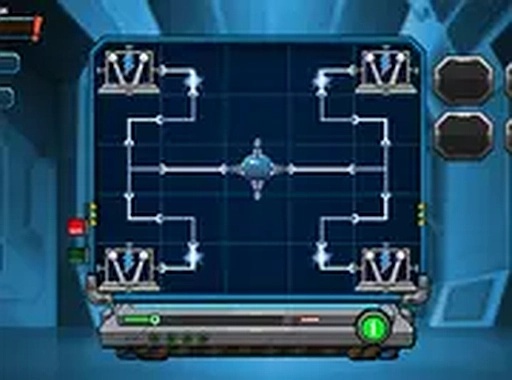
Wired Thinker presents players with a series of grid-based challenges where the goal is to connect power sources to designated endpoints. Each grid cell can hold a single component, and the arrangement must allow electricity to flow from the battery to the target. The game introduces components one at a time, starting with simple wires and gradually adding switches, resistors, and other elements that affect current flow. This layered approach ensures that players build a solid understanding of how each part functions before facing more complex configurations.
The puzzles are organized into groups that increase in complexity. Early levels focus on straight-line connections and basic turns. Later puzzles require players to create branching paths, incorporate switches that redirect power, and work around obstacles that block certain placements. The difficulty ramps up smoothly, so each new concept builds on previous knowledge. This structure makes the game accessible to newcomers while still offering satisfying challenges for experienced puzzle solvers.
Wired Thinker encourages a trial-and-error approach. If a circuit fails, players can quickly rearrange components and test again. This immediate feedback loop helps players understand cause and effect in electrical systems. The game does not penalize mistakes, so users feel free to explore different configurations. Over time, players develop strategies for efficient circuit layout, such as minimizing wire length or planning switch positions to control multiple paths.
The game runs entirely in a web browser, supporting both desktop computers and mobile devices. Controls are optimized for touch input, making it easy to drag and drop components on tablets and phones. A full-screen mode is available for a larger workspace. No installation or account creation is required, allowing instant access from any modern browser. This cross-platform compatibility means players can pick up where they left off on different devices.
While primarily a logic puzzle, Wired Thinker also introduces basic principles of electricity in a safe, non-technical way. Players learn how circuits function without needing any prior knowledge of electronics. The game presents these concepts through gameplay rather than lectures, making it suitable for children and adults alike. Parents and teachers can use it as a supplementary tool to spark interest in STEM topics.











Player Comments
Sign in to comment
You must be logged in before posting a review or rating.
No account? Create one
No comments yet. Be the first to comment!