Shape Fit Challenge stands out for its polished simplicity. The drag-and-drop controls respond instantly, and the board layout is easy to read. What makes it engaging is the strategic layer: you must constantly balance immediate placement against future possibilities. The difficulty ramps up smoothly, so beginners feel comfortable while veterans stay challenged. The calm visuals and gentle audio create a pleasant atmosphere that encourages longer sessions. For anyone seeking a thoughtful yet low-pressure puzzle game, this is a solid choice.
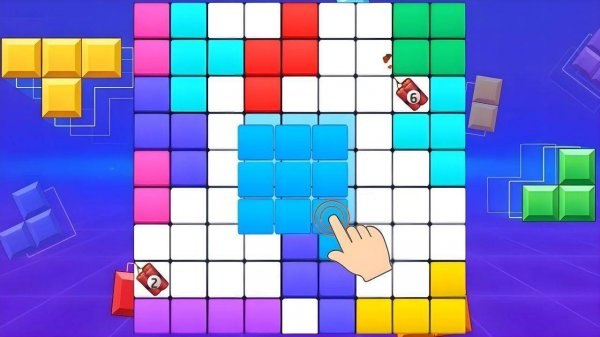
At its heart, Shape Fit Challenge revolves around placing tetromino-like shapes onto a square board. Each shape appears one at a time, and you must decide where it fits best. The goal is to fill entire rows or columns without gaps. When you succeed, that line vanishes, giving you more room to work. This cycle of placement and clearing forms the basis of every session.
While the controls are straightforward, the game rewards thoughtful planning. You must consider not only where a shape fits now but how it affects future placements. Leaving small gaps can limit your options later. Experienced players learn to set up multiple line clears at once, which keeps the board open longer and boosts their score.
The interface is clean and uncluttered, with bright colors that make each shape distinct. The board uses a subtle grid pattern that helps with alignment. Background music is calm and unobtrusive, while sound effects for placing shapes and clearing lines provide gentle feedback. This combination creates a relaxing atmosphere suitable for unwinding.
New players will find the early stages forgiving, with plenty of time to consider each move. As you progress, shapes appear more quickly, and the board becomes more crowded. This gradual increase in challenge keeps the experience fresh without becoming frustrating. The game can be played in short bursts or for extended periods, adapting to your schedule.
To perform well, try to keep the board as flat as possible. Avoid building tall stacks in one area, as this reduces your flexibility. Focus on clearing lines near the bottom first, which opens up the most space. With practice, you will develop an intuition for which shapes work best together and how to recover from tight situations.







Player Comments
Sign in to comment
You must be logged in before posting a review or rating.
No account? Create one
No comments yet. Be the first to comment!